In modern building design, stack ventilation is gaining renewed attention as architects and engineers search for energy-efficient ways to bring fresh air into occupied spaces. Based on the simple principle that warm air rises, a ventilation stack uses natural forces to pull cool air indoors while releasing hot air upwards through vertical air pathways such as roof vents or high-level openings.
This passive process improves air quality, reduces reliance on mechanical ventilation, and lowers a building’s overall carbon footprint. At the same time, stack ventilation supports occupant comfort and contributes to an energy efficient building design – making it both a traditional method and a modern solution.
In this article, we explore how stack ventilation works, why it matters today, and which design considerations and market trends are shaping its use. The article also highlights how we enhance this natural process with intelligent control systems at WindowMaster.
What is stack ventilation, and how does it work?
At its core, stack ventilation relies on the natural behaviour of air. When warm air rises, it creates a pressure difference between lower and higher parts of a building. This causes incoming air to be drawn in through inlet openings, such as windows or low-level air inlets, while hot air is expelled through roof vents or other high-level outlets. This principle is often described as the chimney effect, where vertical air movement is generated without the use of mechanical fans. In practice, a ventilation stack may be a dedicated shaft or simply a well-designed sequence of vertical air pathways that allow buoyancy-driven airflow to occur. By using the stack effect, a building can passively pull air through occupied spaces, supplying fresh outdoor air while removing stale, humid, or overheated indoor air. Stack ventilation works particularly well in climates with distinct temperature differences between indoors and outdoors, and in buildings with higher heights where airflow can develop more naturally. It is also highly effective when combined with cross ventilation, enabling continuous air movement through multiple sides of the building.
What are cross ventilation and passive stack ventilation?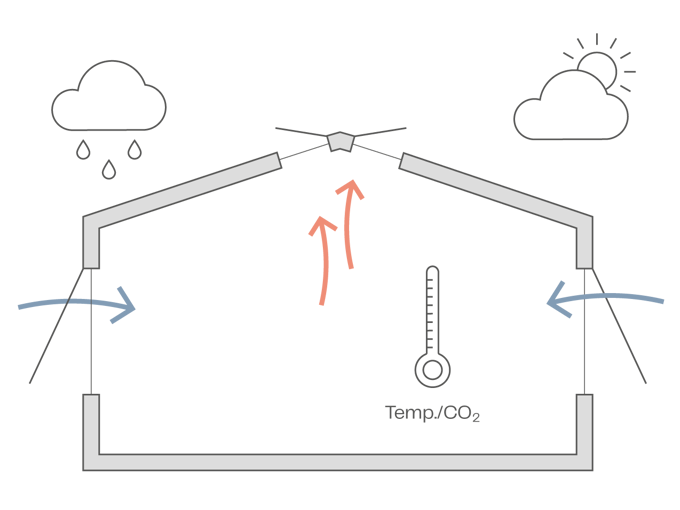
Why stack ventilation matters today
With growing concerns around energy consumption and indoor climate, stack ventilation is emerging as a vital part of modern ventilation strategies. Unlike purely mechanical ventilation or active HVAC cooling, stack ventilation harnesses natural forces – temperature differences and the stack effect – to deliver fresh air without relying heavily on mechanical equipment. This makes it a cornerstone of energy-efficient ventilation systems, helping to cut energy costs and reduce a building’s carbon footprint. In today’s airtight buildings, maintaining healthy air quality is crucial. By allowing cool outdoor air to enter and warm indoor air to escape, stack ventilation ensures a steady flow of oxygen-rich air and removes excess humidity and pollutants. This improves comfort for occupants and supports regulatory demands for minimum ventilation rates. When combined with intelligent controls, it becomes not just a passive system but an adaptive, future-ready solution that is increasingly popular in schools, offices, and public buildings where long-term efficiency and occupant well-being are prioritised.
What is the science behind the stack effect?
The effectiveness of stack ventilation is rooted in physics. When hot air rises inside a building, it creates areas of lower air pressure at higher levels. This pressure difference allows cool outside air to be drawn in through inlet openings near the ground, while the warmer air escapes through roof vents, chimneys, or high-level windows. The greater the temperature difference between indoors and outdoors, the stronger the airflow. This principle, often called the chimney effect, is influenced not only by heat but also by wind speed differences around the building. According to Bernoulli’s principle, the faster air moves across openings, the lower its pressure becomes – further enhancing airflow through the building. In this way, natural forces of buoyancy and wind combine to create continuous air movement without mechanical fans. Factors such as building design, climate, and the building’s surroundings all affect the strength of the stack effect. During the summer months, performance may vary as smaller temperature differences reduce buoyancy-driven airflow.
What trends are shaping stack ventilation in modern buildings?
In recent years, stack ventilation has gained momentum as designers look for ways to combine tradition with technology. Once seen purely as a passive method, it is now part of a broader push toward energy efficiency and reduced carbon emissions. Many public buildings, offices, and educational facilities are adopting passive stack ventilation to reduce reliance on active HVAC cooling, while still ensuring a steady supply of fresh air.
A major trend is the integration of stack ventilation into intelligent control systems. By linking roof vents and air inlets with sensors that monitor temperature, humidity levels, and wind speed differences, airflow can be optimised in real time. Some systems even switch seamlessly between natural ventilation and mechanical support when needed, creating flexible hybrid strategies.
Architectural and regulatory shifts in stack ventilation
There is also growing demand for discreet architectural solutions. Passive ventilation stacks are now designed with insulated aluminium and flush-mounted roof openings to match modern façades, ensuring that performance does not compromise aesthetics.
These innovations reflect a larger market shift: tighter building regulations and occupant expectations for both comfort and safety – similar to the standards shaping smoke ventilation systems. As a result, stack ventilation is no longer viewed as an outdated principle but as a cutting-edge approach to reducing carbon footprints while improving indoor comfort.
Design considerations for stack ventilation
Designing an effective stack ventilation system requires careful attention to building form and airflow pathways. Because the stack effect depends on vertical movement, taller spaces with higher heights or dedicated shafts provide greater potential for natural airflow. Roof vents, skylights, and high-level windows serve as critical exhaust points for warm air rising, while inlet openings at ground level supply a steady flow of cool outdoor air.
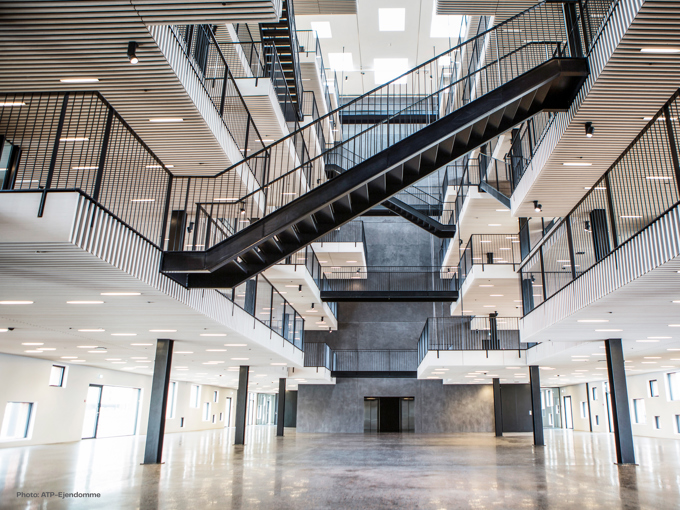
How building design enhances stack ventilation
Architectural details can greatly influence performance. Large windows and unobstructed internal layouts encourage smooth air movement, while obstructions or narrow shafts can restrict the flow. Designers often use solar radiation and managed heat gains to strengthen buoyancy forces, while ensuring that shading elements provide “more or less obstruction” depending on seasonal needs. Stack ventilation works most effectively when combined with cross ventilation, allowing fresh air to move laterally through spaces before being drawn upward. This combination ensures both comfort and air quality, reducing reliance on mechanical ventilation. At the same time, strategies must account for variations in climates, humidity levels, and building surroundings. A thoughtful ventilation strategy balances these factors to create an energy-efficient ventilation system that is both reliable and adaptable.

How WindowMaster takes stack ventilation into the future
At WindowMaster, we turn the general principle of stack ventilation into intelligent, reliable solutions. By combining buoyancy with wind-driven ventilation, our systems use both vertical and lateral airflow to ensure steady comfort and air quality. Carefully designed open windows and vents on opposite sides of a building strengthen crossflow, while high-level outlets respond to lower pressure created as warm air rises.
Modern controls make it possible to fine-tune these natural forces. For example, allowing solar radiation to create small heat gains can improve airflow, while sensors adapt automatically when wind moves faster, harnessing the Bernoulli effect. This ensures performance is not greatly affected by seasonal changes or building surroundings.
Ready to optimise your project with stack ventilation?
Looking to optimise your project with stack ventilation? At WindowMaster, we combine decades of expertise with intelligent control systems to ensure your building benefits from both natural forces and smart automation. Our solutions are designed to improve comfort, air quality, and energy efficiency while reducing the environmental impact of buildings. Contact a specialist today and discover how our team can help you design buildings that breathe naturally, adapt to changing conditions, and deliver safer, healthier environments for every occupant.
Contact us today
What is the formula for stack ventilation?
The airflow in stack ventilation can be estimated with the formula: Q = C × A × √(2ghΔT/Ti), where Q is airflow, C is discharge coefficient, A is opening area, g is gravity, h is height difference, ΔT is indoor-outdoor temperature difference, and Ti is indoor absolute temperature. This illustrates how buoyancy drives airflow through vertical pathways.
What are the disadvantages of stack ventilation?
While stack ventilation is energy efficient, it has limitations. Performance depends heavily on temperature differences and building height, meaning airflow can weaken during warm summer months. External factors like wind turbulence and urban obstructions can also reduce effectiveness. Without proper design, humidity and pollutants may not be removed consistently, making mechanical backup necessary in some climates.
What is an example of a stack effect?
A common example of the stack effect occurs in tall buildings during winter. As warm air rises, lower pressure at the base draws in cool outdoor air, while hot air escapes through upper openings or roof vents. This natural movement of air can be harnessed in a ventilation stack to maintain airflow without relying solely on mechanical fans.
What is a stack in HVAC?
In HVAC terminology, a “stack” often refers to a vertical shaft or duct used to move air. In stack ventilation, this stack relies on buoyancy – the chimney effect – to drive airflow naturally. In mechanical HVAC systems, stacks may also be used to channel exhaust air outdoors or distribute conditioned air through a building’s height.