
Buildings are not as still as they seem. Even when doors are closed and systems are running quietly in the background, air is constantly moving through cracks, openings, shafts, stairwells, and hidden gaps. One of the forces behind this movement is the stack effect — a natural airflow process that can make a building behave almost like a chimney. When warm indoor air rises and escapes at higher levels, cooler air is pulled in from below. This movement can be useful when it supports natural and hybrid ventilation and helps remove stale air, but it can also create drafts, heat loss, uneven temperatures, and pressure problems if it is not controlled. Get to know more about the stack effect, why it happens, how it influences buildings, and which key factors determine how strong its impact will be.
What is the stack effect?
The basic principle behind the stack effect is the natural movement of air caused by differences in temperature, density, and pressure. Warm air is less dense than cold air, which means it is lighter and tends to rise. In a building, heated indoor air therefore moves upward through spaces such as stairwells, shafts, lift cores, and other vertical openings. At the same time, colder outdoor air is denser and heavier, so it tends to sink and enter the building at lower levels through doors, cracks, gaps, basements, and other leaks. This creates a pressure difference between the lower and upper parts of the building. The lower levels often experience negative pressure, which pulls outside air in, while the upper levels often experience positive pressure, pushing indoor air out. The greater the temperature difference between inside and outside, and the taller the building, the stronger this effect becomes. The stack effect is therefore especially noticeable in winter and in high-rise buildings. Although it is a natural physical process, it can strongly influence comfort, energy use, ventilation, and indoor air quality. Understanding this principle is important for designing and operating buildings that are comfortable, efficient, and well-controlled.
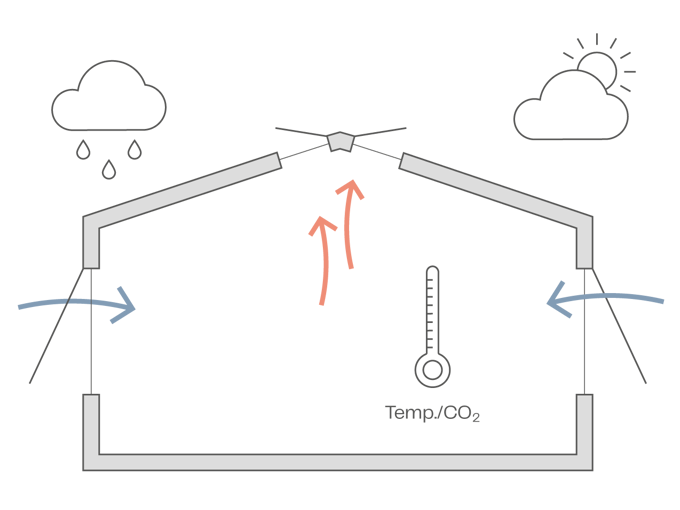
How stack effect works in buildings
In buildings, the stack effect creates a vertical airflow pattern driven by differences in temperature and air pressure. During colder periods, warm indoor air becomes lighter and rises through the building. As it moves upward, replacement air is drawn in at lower levels through openings such as doors, basement areas, cracks, gaps, and other leaks in the building envelope. The rising warm air often travels through vertical pathways like stairwells, elevator shafts, atriums, service penetrations, and ventilation shafts. When it reaches the upper parts of the building, the air escapes through leaks, vents, roof openings, windows, or other gaps. This continuous movement of air can affect comfort, energy use, ventilation performance, and indoor air quality.

Positive impacts of the stack effect
The stack effect can have several positive uses when it is understood and controlled properly. Its main benefit is that it can support natural and hybrid ventilation by helping move fresh air through a building without relying fully on mechanical fans. As warm indoor air rises and escapes at higher levels, cooler replacement air can be drawn in at lower levels, creating a continuous airflow.
This can improve indoor air quality by helping remove stale air, moisture, odours, and pollutants. In buildings designed for passive ventilation, the stack effect can reduce the need for mechanical ventilation and therefore lower energy use. It can also contribute to passive cooling, especially when warm air is allowed to escape through high-level openings such as roof vents, atriums, or clerestory windows.
The stack effect is also useful in specific systems such as chimneys and flues, where rising warm air helps carry smoke and combustion gases safely out of a building. In well-designed buildings, it can be used as part of a broader environmental strategy to improve comfort, support ventilation, and reduce dependence on mechanical systems.
Key factors that influence the stack effect
Several factors determine how strong the stack effect will be in a building. One of the most important is the temperature difference between indoor and outdoor air. The greater this difference, the stronger the pressure imbalance becomes, especially in cold weather when warm indoor air rises and escapes. Building height also plays a major role because taller buildings create a larger vertical pressure difference between the lower and upper floors. Airtightness is another key factor: a leaky building envelope allows more air to enter and escape, increasing uncontrolled airflow. The size and location of openings also matter, as large gaps, doors, windows, vents, and roof openings can either intensify or help control air movement. Internal vertical pathways such as stairwells, elevator cores, chimneys, atriums, and service shafts allow air to move more easily through the building. Wind and mechanical ventilation systems can further influence the stack effect by adding pressure forces that either support, reduce, or disrupt the natural airflow pattern.

Why the stack effect should be considered
Taking the stack effect into account is important because it can influence how a building feels, performs, and uses energy. If it is not considered, uncontrolled air movement may lead to drafts, heat loss, uneven temperatures, pressure problems, and reduced ventilation performance. It can also affect indoor air quality by moving stale air, moisture, odours, or pollutants through the building.
When the stack effect is understood and managed properly, it can become a useful part of the building’s ventilation and energy strategy rather than a source of discomfort or inefficiency. By considering factors such as airtightness, building height, openings, vertical shafts, and mechanical ventilation, building owners and facility managers can create indoor environments that are more comfortable, efficient, and well-controlled. This is an area where WindowMaster can help as we have the solutions and expertise that support controlled natural and hybrid ventilation, indoor comfort, and efficient building operation.