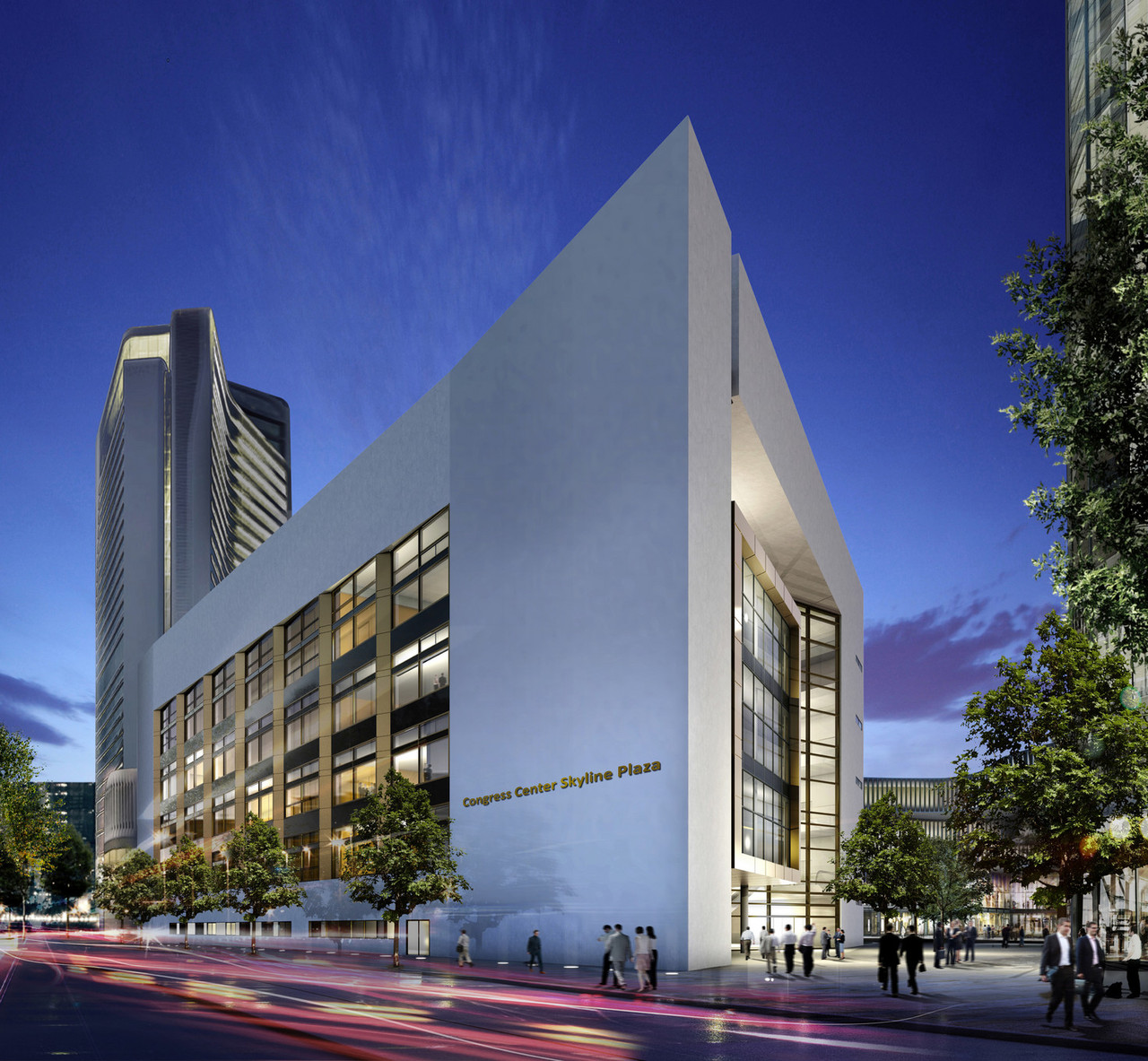
For decades, “good ventilation” in larger buildings has almost automatically meant large mechanical systems, kilometres of ductwork and high fan energy use. But what if a large part of that isn’t actually necessary? If we are serious about healthy, energy-efficient buildings and lower emissions, we need to put natural ventilation back at the centre of design – not treat it as an afterthought.

Want to find out more?
Reach out to WindowMaster’s natural and hybrid ventilation experts. Get in touch to discover how you can achieve healthier, more comfortable indoor environments.
From “someone opens a window” to façade automation
Many still imagine natural ventilation as something manual:
Someone walks around and opens a few windows when it feels stuffy.
Modern natural ventilation works very differently. Today, intelligent systems combine:
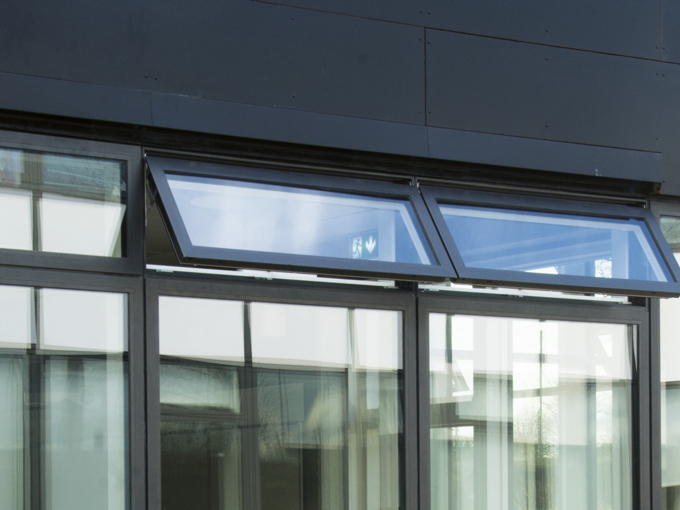
- Window actuators – compact motors that open and close windows or vents
- Indoor sensors – monitoring temperature, CO₂ and humidity
- Outdoor weather stations – measuring wind speed and direction, rain and outdoor temperature
- Smart control systems – deciding when, how much and how fast windows and sun shading should operate
Instead of reacting only when people feel uncomfortable, the system anticipates changes in the indoor climate.
For example, sun screening can be activated at 05:00 in summer – long before the first occupants arrive – so the building doesn’t overheat before the day even starts.
The same applies to air quality. Humans adapt quickly to “bad” indoor air; our nose stops noticing smells, and we rarely sense rising CO₂ levels until we feel tired. Sensors don’t adapt – they react continuously, and the windows open just enough to restore a healthy indoor environment.
“Fresh air should not depend on whether someone remembers to open a window. Well-designed systems make good air quality the default, not a coincidence.”

Jannick Roth
Building Performance & Standardization Manager
Quiet, automatic – and still under user control
One common concern is: Will people feel disturbed by windows constantly moving?
To address this, actuators in intelligent natural ventilation systems typically operate with three different speeds:
- Smoke ventilation speed – full opening in under 60 seconds for life safety scenarios
- Manual override speed – a visible, slightly faster movement when someone presses a wall switch
- Automatic comfort speed – very slow, often 10–30% of max speed, so most occupants barely notice the movement
The system always includes manual override options – either via a local switch or a digital interface. Occupants can open or close windows in their own zone when they feel the need, and in some setups they can see live values such as room temperature and CO₂ in an app.
This balance is important:
- The system handles the baseline, keeping CO₂, temperature and humidity within agreed limits.
- People still feel in control of their own environment – a key factor in user satisfaction.

“When occupants can see that the system reacts – and still have the option to intervene locally – trust in the solution rises dramatically.”

Christian Markussen
Business Development Manager
Fresh air that pays back: productivity and ROI
Ventilation is often discussed mainly in terms of energy consumption. But the strongest business case frequently lies somewhere else: productivity. Studies indicate productivity improvements of up to 18% in better-ventilated environments. Even if a project only achieves a fraction of that, the impact is significant: • Higher concentration levels • Fewer headaches and complaints • Better learning outcomes in schools • Fewer errors and higher output in offices When these effects are translated into salary costs and business performance, the payback time of an intelligent natural ventilation system can be as low as around one year, purely from productivity gains. On top of that, natural and hybrid systems typically reduce fan energy and – in many cases – cooling demand.
Discover the benefits of natural and hybrid ventilation
Night cooling as a simple example
• At night, the system opens selected windows or vents. • Cool outdoor air flushes the building and cools the internal thermal mass. • The next morning, occupants arrive to a comfortable temperature instead of starting the day at 28°C. All of this happens automatically, without a caretaker walking around opening windows in the evening and closing them again before people arrive.
Learn about night flushing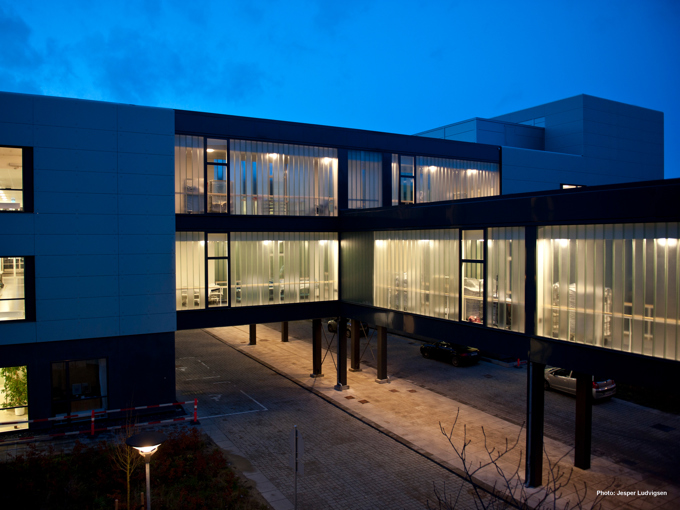
The ventilation “elephant in the room”: energy and embodied carbon
Mechanical ventilation is not only energy-intensive in operation. The systems themselves also carry a large embodied carbon footprint.
Several key points stand out:
- In Danish building projects, the large components of a mechanical ventilation system can account for around 10% of the total embodied emissions of a building.
- In a British study of offices, around 40–47% of operational energy was linked to HVAC systems – mainly mechanical ventilation and cooling.
- Compared with full-scale mechanical systems (ducts, large air handling units etc.), natural ventilation solutions can have up to 20 times lower embodied carbon in the ventilation system itself.
For countries tightening requirements on whole-life carbon, that matters. Choosing a leaner ventilation strategy is a straightforward way to reduce both operational and embodied emissions without compromising indoor comfort.
“We often talk about kilowatt-hours, but kilograms of CO₂ in the installed system are just as important. A lighter solution that uses natural forces more actively can make a real difference in the building’s total footprint.”
Jannick Roth
Building Performance & Standardization Manager
A Norwegian high-rise that flipped the script
A good illustration of this approach is Vertikal Nydalen in Oslo – a mixed-use building with offices and apartments. The developer wanted a building that would perform at least as well in real life as it did on paper.
For this project, the team adopted a “keep it simple” strategy:
- Natural ventilation is used as the primary strategy.
- The building aims for “triple zero”: no purchased energy for heating, cooling, ventilation and lighting over the year, thanks to a combination of solutions.
- The design avoids suspended ceilings filled with ducts – resulting in around one extra metre of floor-to-ceiling height.
After a year of operation, the results were compared with the original design figures and with mechanically ventilated reference buildings:
- Energy use was about 30% lower than calculated.
- The building achieved around 50% lower greenhouse gas emissions compared to a traditional solution.
- Post-occupancy evaluations showed that occupants rated the indoor climate significantly higher than in the mechanical reference buildings.
The project demonstrates that simpler systems – when thoughtfully designed – can deliver better indoor climate, lower energy use, lower construction cost, lower operating cost and reduced emissions in one integrated concept.
Understand how natural and hybrid ventilation can improve your building’s energy efficiency

Renovation: where most of tomorrow’s buildings already stand
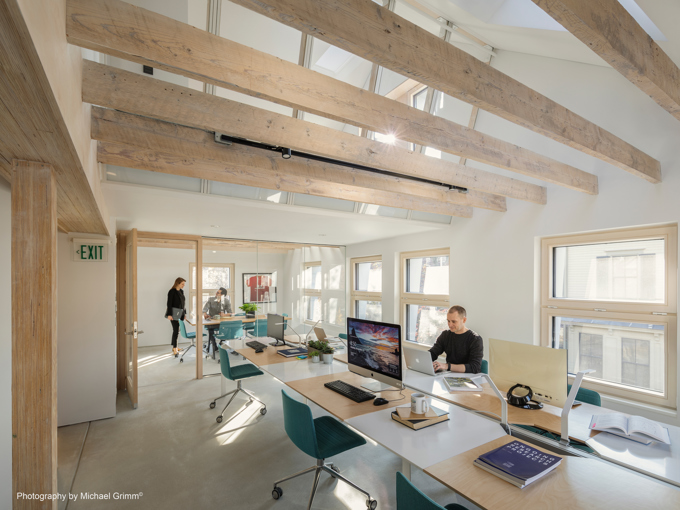
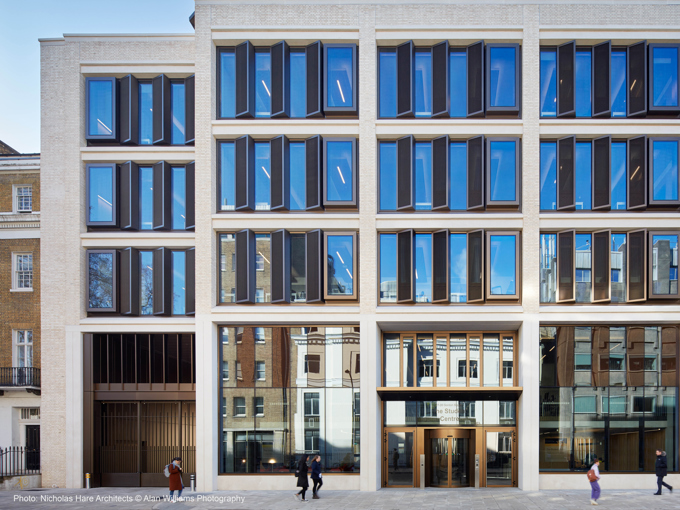
New-build standards are tightening, but most of the 2050 building stock already exists today. In Denmark, estimates suggest that around 80% of today’s buildings will still be in use in 2050. This is where natural ventilation and mixed-mode solutions are especially interesting: • If there is an opening, it can usually be automated. Actuators can be integrated into new window frames during façade upgrades or mounted on existing windows – even in protected heritage buildings. • Refurbishments often include new glazing and insulation. That is the ideal moment to integrate actuators and controls in the new façade system. • Less technical infrastructure means less disruption for occupants during retrofit – no need to carve space for large ducts and plant rooms in constrained existing structures. For owners facing major renovation cycles, this opens a path to improved indoor climate, lower energy use and lower embodied carbon – without turning the entire building into a long-term construction site.
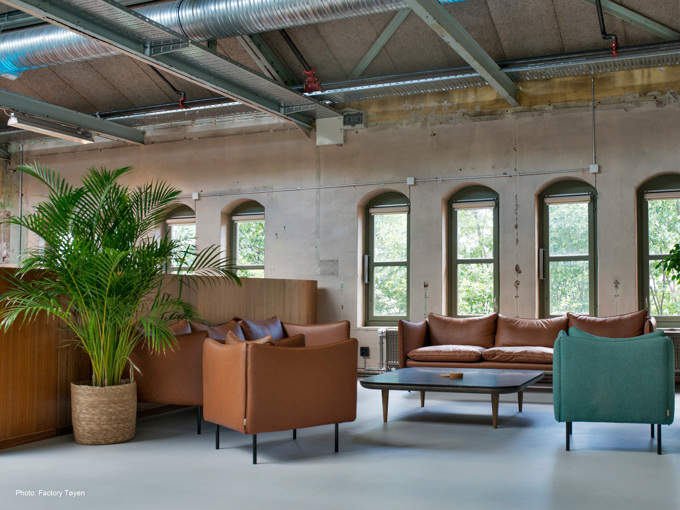
“If there’s an operable element in the façade, there’s usually an opportunity to turn it into part of a ventilation strategy. That’s where a lot of the untapped potential lies in refurbishment projects.”
Christian Markussen
Business Development Manager
Giving occupants control – without giving facility managers a headache
From a facility manager’s perspective, “more systems” often risks “more complaints”. But a well-designed natural or mixed-mode setup can have the opposite effect.
Key advantages include:
- Fewer components to maintain: no large filters to replace, less duct cleaning, fewer moving parts in central equipment.
- Clear overview: the control system knows which windows are open or closed and can provide dashboards with essential metrics for operations.
- Local empowerment: occupants can override settings within defined limits, reducing calls to the facility team for minor comfort issues.
For owners and operators, that translates into lower running costs, less downtime and a more robust system overall.
Walking the talk: WindowMaster’s own commitments
Natural and mixed-mode ventilation can make buildings significantly more energy-efficient – but manufacturers also have a responsibility. WindowMaster has committed to: • Aligning with the Science Based Targets initiative (SBTi) for emissions reductions • Electrifying the vehicle fleet, including service cars and lorries • Working towards circular production by 2030 • Operating a take-back scheme for products at end-of-life – in some cases including competitors’ products In one municipal project, 96% of returned WindowMaster products could be reused or recycled, and even competitors’ components reached reuse rates of around 88%. These initiatives support the same goal as our ventilation strategies: healthier indoor environments with a significantly lower impact on the planet.

What needs to happen next?
Despite all these benefits, mechanical ventilation still accounts for around 97–98% of the market in many regions. Changing that will require: • Legislation that recognises whole-life carbon and rewards leaner, low-energy solutions • Design teams who bring natural and mixed-mode strategies to the table early, not as a late “nice-to-have” after the mechanical system is fixed • Owners who look beyond first-cost alone and factor in productivity, running costs and emissions In many projects, a fully natural solution will be possible. In others, a mixed-mode approach – combining the strengths of natural and mechanical ventilation – will be the optimal strategy. The important point is to use natural forces wherever possible and mechanical systems only where necessary.
Ready to explore a different way of ventilating?
Whether you are planning a new office, a school refurbishment or a mixed-use development, it is worth asking one simple question at concept stage: “Could this building work with natural or mixed-mode ventilation instead?” If the answer might be “yes”, involving specialists early makes it possible to:
- Evaluate relevant natural ventilation strategies
- Estimate air change rates and indoor comfort, including night cooling scenarios
- Assess potential energy and emission savings versus conventional solutions
- Design actuator, control and façade interfaces that support the architectural vision
Fresh air, better indoor climates and lower emissions are not competing goals. With the right strategy, they reinforce each other – and natural ventilation is often the low-hanging fruit that makes it possible.